※This page was translated by AI from the original Japanese version. There may be differences in wording or nuance, so please refer to the Japanese original for the most accurate information.
One day, as I picked up a bottle of POCARI SWEAT at a convenience store in Korea, I found myself thinking:
“I feel like I drink this more often than I did in Japan.”
Whenever I feel a little under the weather, I tend to drink a POCARI first and see how I feel. That has become a habit since I moved here.
Products such as POCARI SWEAT and ORONAMIN C, which you often see in Korea as well, were created by Japan’s Otsuka Pharmaceutical.
But Otsuka is actually a global company that operates not only in Korea but around the world.
In this article, I will introduce how Otsuka Pharmaceutical began in Japan, the history of its expansion into Korea, its global activities, and some of the main products sold in Korea.
- How It Began in Japan: From a Chemical Raw Materials Maker in Tokushima to a Global Business
- Expansion in Korea: Two Main Companies
- POCARI SWEAT and ORONAMIN C in Korea
- Global Expansion: A Network Spanning 32 Countries and Regions
- Main Otsuka-Related Products Sold in Korea
- Summary: From Japan to Korea, and Then to the World
How It Began in Japan: From a Chemical Raw Materials Maker in Tokushima to a Global Business
To understand the history of Otsuka Pharmaceutical, we first need to go back to the roots of the Otsuka Group.
In 1921, Busaburo Otsuka founded the Otsuka Pharmaceutical Factory in Naruto, Tokushima Prefecture.
It began as a manufacturer of chemical raw materials such as magnesium carbonate, but in 1946 it entered the pharmaceutical field by starting an intravenous solution business.
Then, in 1964, the sales and overseas divisions of Otsuka Pharmaceutical Factory became independent, and Otsuka Pharmaceutical Co., Ltd. was established.
At first, the company sold group products such as intravenous solutions. It later began developing its own pharmaceuticals and expanded into beverages, nutritional foods, and other fields.

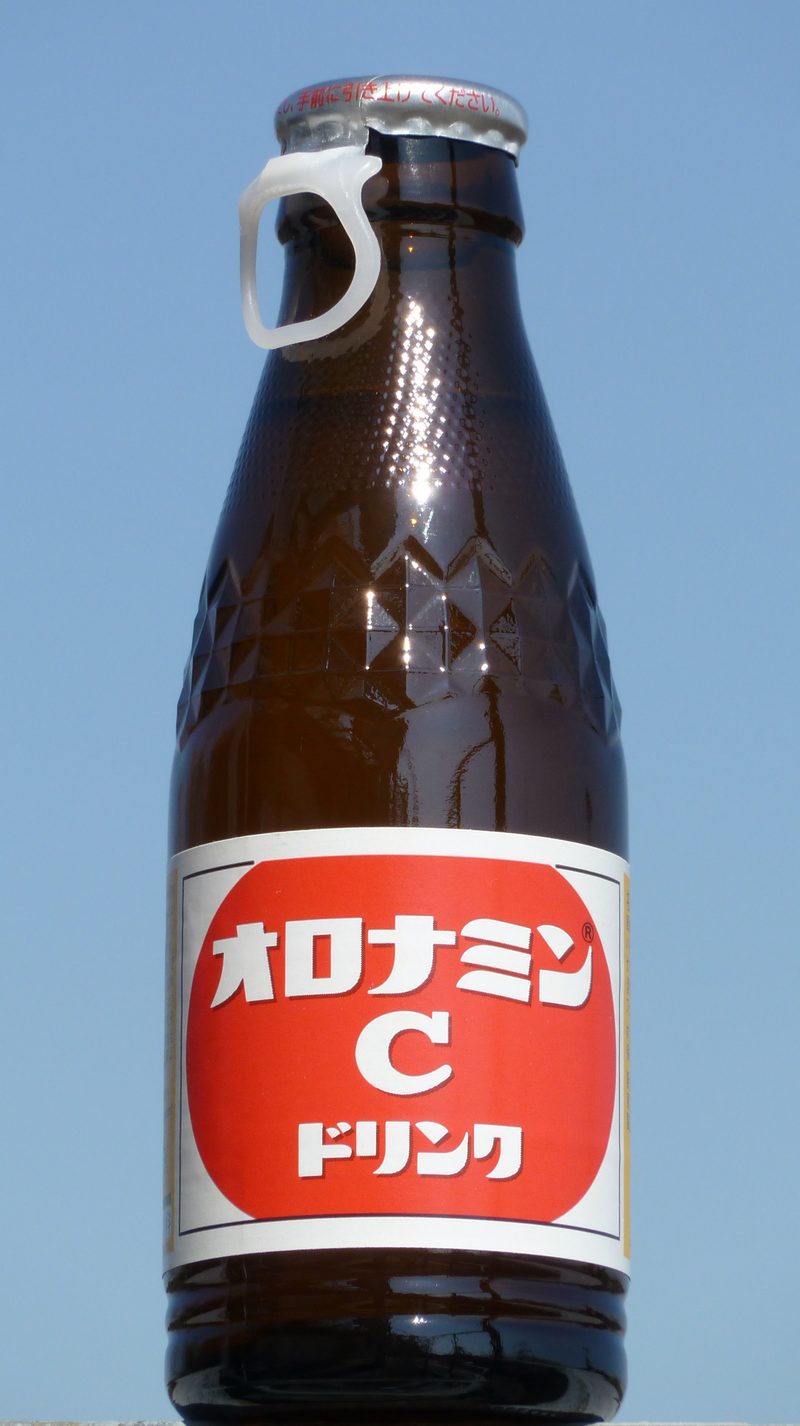
ORONAMIN C (Launched in 1965)
ORONAMIN C is well known in Japan for its energetic “Genki Hatsuratsu!” advertising slogan.
Launched in 1965, it is a carbonated nutritional drink that has remained popular across generations in Japan.
In fact, there is an interesting story behind the birth of ORONAMIN C.
At the time, Otsuka Pharmaceutical had already released a series of medicinal nutritional drinks, but they continued to struggle in the market.
So the company set out to create something different from conventional nutritional drinks: a new product focused on taste.
That led to the idea of adding carbonation to a nutritional drink.
A new, refreshing carbonated drink was completed and submitted for approval as a medicinal drink.
However, Japan’s Ministry of Health at the time ruled that “a carbonated beverage cannot be approved as a medicinal drink.”
Should the company remove the carbonation and sell it as a medicine? Or should it prioritize taste and release it as a soft drink?
Otsuka Pharmaceutical chose the latter.
And that is how a carbonated nutritional drink, quite different from the nutritional drinks that came before it, was born.
Incidentally, the name “ORONAMIN C” combines “Orona” from the company’s popular ORO NINE ointment with “min C,” derived from vitamin C.
ORONINE and ORONAMIN C. The names really do sound similar, don’t they?
POCARI SWEAT (Launched in 1980)
POCARI SWEAT was launched in Japan in 1980.
The idea was reportedly inspired by the experience of a researcher who became ill while on a business trip to Mexico, as well as by seeing a doctor drink intravenous solution to rehydrate after surgery.
From those experiences came the concept of a “drink for sweat” that replenishes the water and electrolytes (ions) lost through perspiration.
However, when the product first launched, consumers had a hard time understanding this new concept.
So employees went directly to places where people sweat, such as sports facilities, and handed out the product while explaining the importance of replacing fluids and electrolytes.
In the first year alone, an astonishing 30 million bottles were distributed.
Those steady efforts paid off, and by the summer of its second year POCARI SWEAT had become a major hit.
It is easy to take POCARI SWEAT for granted today, but there was a lot of hard work behind its success.
Incidentally, the name “POCARI SWEAT” also has a meaning behind it.
“Sweat,” of course, means perspiration in English.
“Pocari,” on the other hand, is an invented word with no specific meaning. It was reportedly chosen for its pleasant sound and because it evokes the image of a refreshing blue sky.
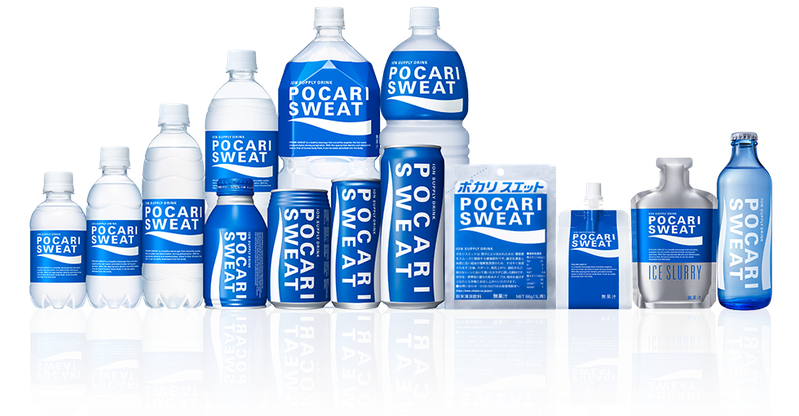
Source: https://pocarisweat.jp/products/pocarisweat/
The Meaning Behind That Blue Package
When you think of POCARI SWEAT, you probably picture its blue-and-white packaging.
It is completely familiar today, but when the product was launched in 1980, cool colors such as blue tended to be avoided on food and beverage packaging.
Despite that, Otsuka Pharmaceutical boldly chose blue.
According to the official website, blue represents the sea, the origin of life, while white represents waves.
Even more interesting is the shape of that white wave.
It is said to symbolize the curve of a graph comparing the absorption rates of POCARI SWEAT and plain water.
In other words, the design was not simply meant to look refreshing; it visually expressed a characteristic of the product itself.
Today, many people probably think of POCARI SWEAT as soon as they see that shade of blue.
Expansion in Korea: Two Main Companies
When I looked into Otsuka Pharmaceutical’s business in Korea, I found something interesting.
In fact, Otsuka-related products sold in Korea are mainly handled through two companies.
Donga Otsuka (동아오츠카)
Donga Otsuka is the company that manufactures and sells beverages such as POCARI SWEAT and ORONAMIN C in Korea.
Its predecessor was established in 1979 after being spun off from the food business division of Korea’s Dong-A Pharmaceutical.
POCARI SWEAT was launched in Korea in May 1987. In July of the same year, the company formed a capital partnership with Japan’s Otsuka Pharmaceutical, and in 1992 it adopted its current name, Donga Otsuka.
Then, in February 2015, ORONAMIN C went on sale in Korea as well.
Since the product had been launched in Japan in 1965, it arrived in Korea roughly 50 years later.
Donga Otsuka also operates Korean beverage brands of its own and continues to do business as a beverage company rooted in the local market.
Korea Otsuka Pharmaceutical (한국오츠카제약)
The other company is Korea Otsuka Pharmaceutical, established in 1982.
It began as Jeil Otsuka Pharmaceutical, a joint venture between Japan’s Otsuka Pharmaceutical and Korea’s Jeil Pharmaceutical.
In 1990, the company changed to its current name and has since expanded its business mainly around the production and sale of pharmaceuticals.
Today, in addition to pharmaceuticals, it also handles supplements such as Nature Made, skincare products such as UL·OS, and nutritional foods such as SOYJOY.
In other words, in Korea, Donga Otsuka sells POCARI SWEAT and ORONAMIN C, while Korea Otsuka Pharmaceutical sells products such as Nature Made, UL·OS, and SOYJOY.
Even products connected to the same Otsuka Group are handled by different companies in Korea.
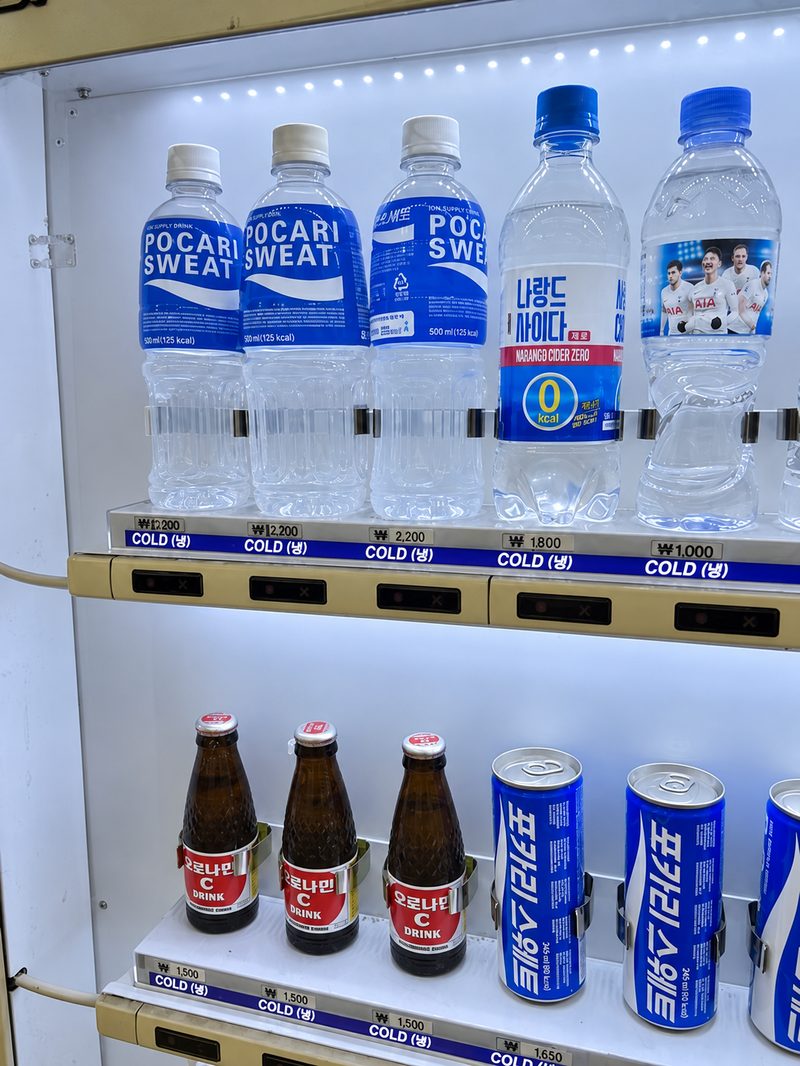
POCARI SWEAT and ORONAMIN C in Korea
The Strong Presence of POCARI SWEAT
POCARI SWEAT, launched in Korea in 1987, remains a familiar drink that can be found in convenience stores, supermarkets, vending machines, and many other places.
The blue-and-white packaging is also familiar in Korea, and the brand image is almost the same as in Japan.
Living in Korea, I feel there are plenty of opportunities to drink it, especially on hot summer days or after exercise.
In Korean, it is written “포카리스웨트” (Pocari Seuweteu).
The pronunciation is also quite similar to Japanese, so even if you do not know much Korean, it is easy to say the product name.
ORONAMIN C Is Surprisingly New to Korea
ORONAMIN C has a history of more than 60 years in Japan, but in Korea it is a relatively new brand, having been launched there in 2015.
In Korea as well, TV commercials and other advertising have promoted a bright and energetic image.
In Korean, it is written “오로나민C” (Oronamin C).
It is nice to be able to find the same distinctive little bottle and familiar flavor in Korea that people in Japan have enjoyed for decades.
Incidentally, ORONAMIN C is sold in countries other than Japan and Korea as well.
Its overseas expansion began in 1985, and surprisingly, the first region it entered was the Middle East.
Sales began in places such as the UAE (United Arab Emirates), and the drink gradually became popular locally as well.
It may be a little surprising to learn that a Japanese nutritional drink spread through the Middle East.
Global Expansion: A Network Spanning 32 Countries and Regions
Otsuka Pharmaceutical’s business extends far beyond Korea.
Across the Otsuka Group as a whole, operations now span 32 countries and regions worldwide.
As of the end of 2025, the group had 182 companies in Japan and overseas, operating in fields such as pharmaceuticals, beverages, nutritional foods, and supplements.
For example, in the United States there is Pharmavite, the company behind the Nature Made supplement brand.
In Cambridge, United Kingdom, there is also Astex Therapeutics, which conducts pharmaceutical research and development.
The scale of Otsuka’s overseas business is also reflected in its sales.
For fiscal 2025, total revenue for the Otsuka Group was approximately 2.4689 trillion yen.
Of that, sales in the Japanese market were about 718.1 billion yen, meaning markets outside Japan accounted for roughly 70% of the total.
From familiar beverages such as POCARI SWEAT to specialized medicines used in hospitals,
a corporate group born in Japan now operates businesses related to people’s health around the world.

Main Otsuka-Related Products Sold in Korea
In Korea, a variety of Otsuka-related products are sold in addition to beverages.
Here are a few products that are easy to find in everyday life.
POCARI SWEAT (포카리스웨트)
An ion-supply drink designed to replenish water and electrolytes lost through sweat.
It was launched in Korea in 1987 and is now manufactured and sold by Donga Otsuka.
Because it uses the same blue-and-white packaging as in Japan, it is easy to spot on store shelves in Korea.
ORONAMIN C (오로나민C)
A bottled carbonated nutritional drink containing vitamin C and other nutrients.
It was launched in Japan in 1965, and Donga Otsuka has manufactured and sold it in Korea since 2015.
As in Japan, one of its distinctive features is the small bottle that makes it easy to drink casually.
SOYJOY (소이조이)
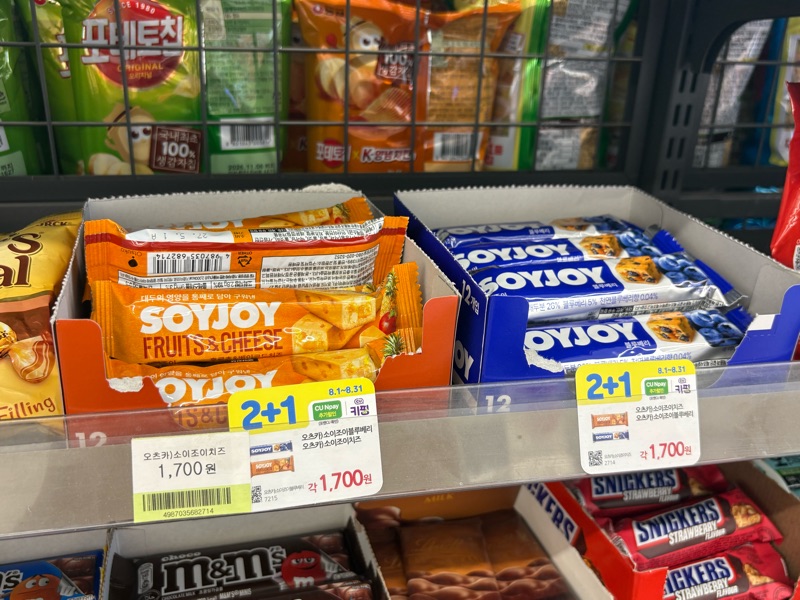
A nutritional bar launched in Japan in April 2006, made with dough produced from whole soybeans ground into flour.
It is made without wheat flour and is baked with combinations of soybeans, fruit, nuts, and other ingredients.
In Korea, Donga Otsuka sold SOYJOY from 2007 to 2021, and Korea Otsuka Pharmaceutical began selling it in May 2024.
In Korea, it is also available at convenience stores and health-and-beauty shops.
Nature Made (네이처메이드)
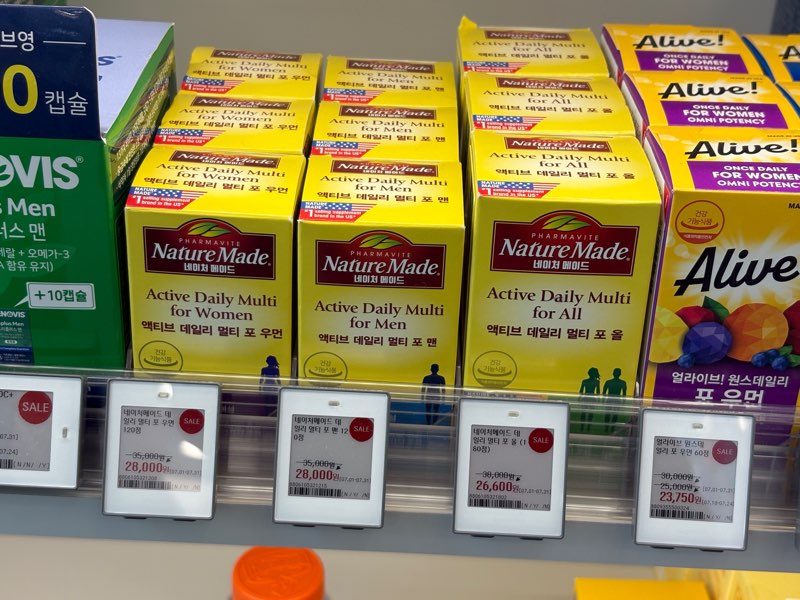
Nature Made is a supplement brand founded in California, USA, in 1971.
In fact, it is not a Japanese-born brand; it originated in the United States.
In 1989, its manufacturer and distributor Pharmavite joined the Otsuka Group, and Otsuka Pharmaceutical began selling Nature Made in Japan in 1993.
In Korea, Korea Otsuka Pharmaceutical has sold the brand since March 2018.
The lineup includes a wide variety of products designed to supplement nutrients such as vitamins and minerals that may be lacking in the diet.
UL·OS (UL・OS/우르오스)
UL·OS is a men’s whole-body skincare brand launched in Japan in September 2008.
It was developed based on Otsuka Pharmaceutical’s many years of skin research.
The brand entered the Korean market in March 2012, and Korea Otsuka Pharmaceutical is responsible for sales.
It has developed products that support men’s everyday skincare needs, including moisturizing and cleansing.
A new skin lotion was launched in Korea as recently as June 2026, and the brand continues to expand its product lineup.
Otsuka Pharmaceutical is strongly associated with medicines and beverages, so some people may be surprised to learn that it also handles skincare products.

Summary: From Japan to Korea, and Then to the World
A small chemical raw materials manufacturer founded in Tokushima in 1921 grew over more than a century into the Otsuka Group, which now operates around the world.
Among its products, POCARI SWEAT and ORONAMIN C are especially familiar parts of everyday life.
In Korea, they were launched at different times, and today they are commonly seen in convenience stores, supermarkets, and elsewhere.
Other products born in Japan, such as SOYJOY and UL·OS, have also expanded into Korea.
Even a drink we casually pick up has a long history of development behind it, along with the efforts of companies that have brought products across national borders.
The next time you see POCARI SWEAT in a convenience store in Korea, take a moment to remember the history behind that familiar blue package.
- Otsuka Pharmaceutical|Company History
- Otsuka Pharmaceutical|The ORONAMIN C Development Story
- Otsuka Pharmaceutical|The POCARI SWEAT Development Story
- Donga Otsuka|Company History (Korean)
- Korea Otsuka Pharmaceutical|Company History (Korean)
- Otsuka Pharmaceutical|SOYJOY Sales in Korea
- Otsuka Holdings|Otsuka Group Business Data