※This page was translated by AI from the original Japanese version. There may be differences in wording or nuance, so please refer to the Japanese original for the most accurate information.
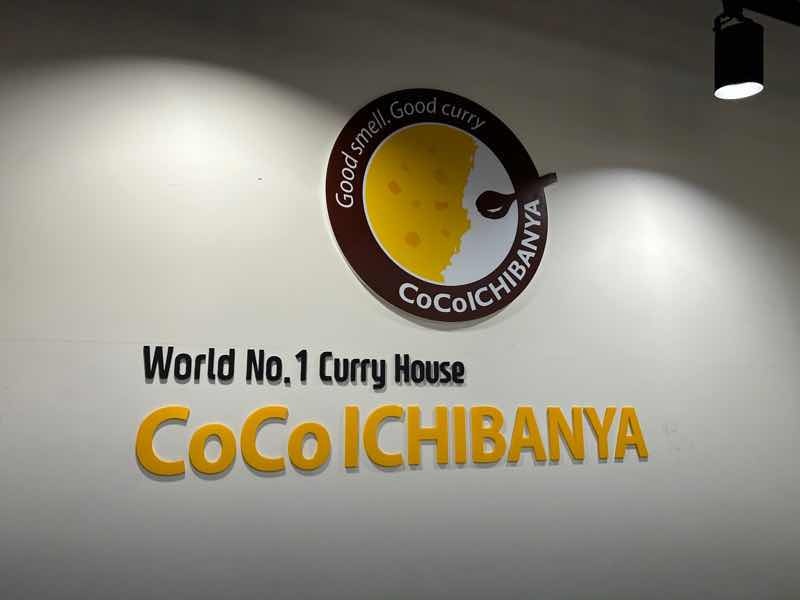
One day, about two years after I moved to Korea, I turned a familiar corner without thinking much of it—and spotted a sign I hadn’t seen in a long time.
“CoCo ICHIBANYA”
Coco Ichi?!
I could hardly believe my eyes.
Was it another restaurant with a similar-looking sign? I took a closer look at the sign and the menu outside. There was no mistaking it: this was the CoCo Ichibanya I knew from Japan.
I’d been living in Korea for two years and had no idea there was a Coco Ichi here—let alone in a neighborhood I visited all the time.
After looking into it, I learned that CoCo Ichibanya has plenty of restaurants outside Japan, too.
According to Ichibanya’s restaurant figures for the end of February 2026, the CoCo Ichibanya brand had 1,205 restaurants in Japan and 217 overseas, for a total of 1,422. Including its other restaurant brands, the group had an impressive 1,503 locations.
Coco Ichi is such a familiar name in Japan. Somewhere along the way, it had grown into a large chain enjoyed around the world.
You can check the latest restaurant figures and other information on Ichibanya’s official website.
The history of Curry House CoCo Ichibanya
CoCo Ichibanya’s story began in 1974, when Tokuji Munetsugu and his wife, Naomi, opened a café called Bacchus in Nagoya.
The curry started as a dish for the café’s delivery menu. Aiming for a comforting, home-style flavor people could enjoy every day, Naomi combined store-bought solid curry roux with a blend of spices, refining the recipe as she went.
The curry became so popular that, in January 1978, the couple opened their first dedicated curry restaurant, Curry House CoCo Ichibanya, in Nishi-Biwajima, Aichi Prefecture—now part of Kiyosu City.
After trying roux from several manufacturers, they chose a product from House Foods. The relationship grew from the curry restaurant’s early days, including requests for spice blends. In December 2015, Ichibanya became part of the House Foods Group.
The chain kept expanding, reaching 100 restaurants in December 1988, 300 in May 1994, and 1,000 in December 2004.
Its overseas expansion began with the first international restaurant on Oahu, Hawaii, in June 1994. It later opened in Shanghai, China (2004), Taiwan (2005), South Korea and Thailand (2008), Hong Kong (2010), and the mainland United States and Singapore (2011).
Further openings followed in Indonesia (2013), Malaysia and the Philippines (2015), Vietnam and the United Kingdom (2018), and even India, the home of curry (2020).
In 2013, it was recognized by Guinness World Records as the world’s largest curry restaurant chain.
A popular curry served in one small café spread across Japan, and now people can enjoy it overseas, too.
Knowing that story makes the Coco Ichi sign I found in Korea feel a little more special.
For more details, see CoCo Ichibanya’s official history page.
The curry’s origins are also discussed in an interview with Munetsugu on Bunshun Online. The early relationship with House Foods is covered in this Nikkan SPA! article.
💡A little trivia
The name “CoCo Ichibanya” reflects the founders’ belief that their curry was the best: “For curry, this is the best place!” In Japanese, that idea is expressed as “koko ga ichiban ya.”
There’s also a story behind spelling “koko,” meaning “here,” as “CoCo”: it was inspired by Coco Chanel. In an interview, Tokuji Munetsugu said that this was how Naomi explained the spelling. I hadn’t expected that connection behind such a familiar name.
For more on the name, see Munetsugu’s interview on NewsPicks and the Chunichi BIZ Navi article below.
When did CoCo Ichibanya open in Korea, and how many restaurants are there?
CoCo Ichibanya arrived in South Korea in March 2008.
Its first Korean restaurant opened in Gangnam, Seoul, and more locations followed. The official restaurant figures for the end of February 2026 list 40 restaurants in Korea.
The Korean business began through a joint venture involving Ichibanya, House Foods, and Nongshim, the company known for Shin Ramyun. The current Korean official website also names Nongshim as a company involved in operating the business.
The early years seem to have got off to a strong start. In an announcement dated July 8, 2010, Nongshim reported that the five existing restaurants, including Gangnam, had received about one million visits in total. The sixth location, in Myeongdong, opened that same day.
For details from that time, see Nongshim’s press release dated July 8, 2010 (in Korean).
Note: The opening of the first Korean location was also covered in JoongAng Ilbo’s March 7, 2008 article (in Japanese). Its prices, rice portions, and spice options describe the restaurant at the time of opening.
The restaurant I discovered was one of the locations outside Seoul.
It had been right there in a place I visited regularly, yet it took me so long to notice the sign. If only I’d known sooner…
You can find Korean menus and restaurant information on CoCo Ichibanya’s official Korean website.
Do people eat curry rice in Korea? A look at curry at home
So, do people in Korea eat curry rice?
Of course they do. Curry is a familiar home-cooked meal in Korea, too.
People around me eat it as well, although to me, it tastes a little different from the curry I grew up eating at home in Japan.
Thankfully, I also come across Japanese curry roux in Korean supermarkets.
When I’m craving Japanese curry, I often buy some roux and make it myself.
My usual choice is the hot version of House Foods’ Java Curry. I’ve also seen Vermont Curry and S&B’s Golden Curry.
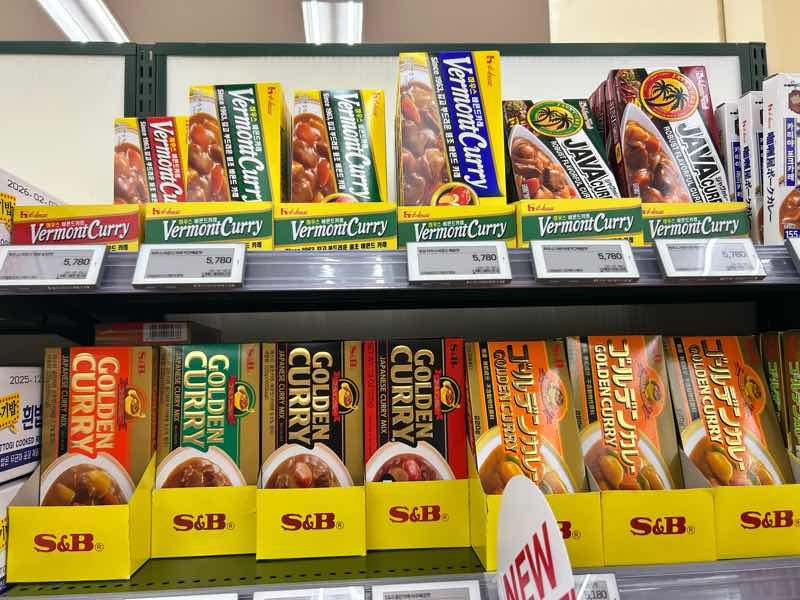
I’m really grateful that I can enjoy Japanese curry while living here.
Still, home cooking aside, sometimes I get a real craving for Coco Ichi.
CoCo Ichibanya in Korea: How does it compare with Japan?
Now for the question I was most curious about: how does Coco Ichi taste in Korea?
I took a bite, wondering whether it would taste the same as in Japan. To my delight, it tasted almost exactly the same to me.
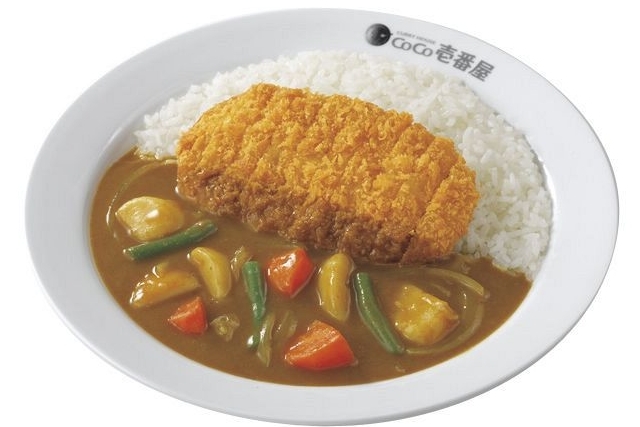
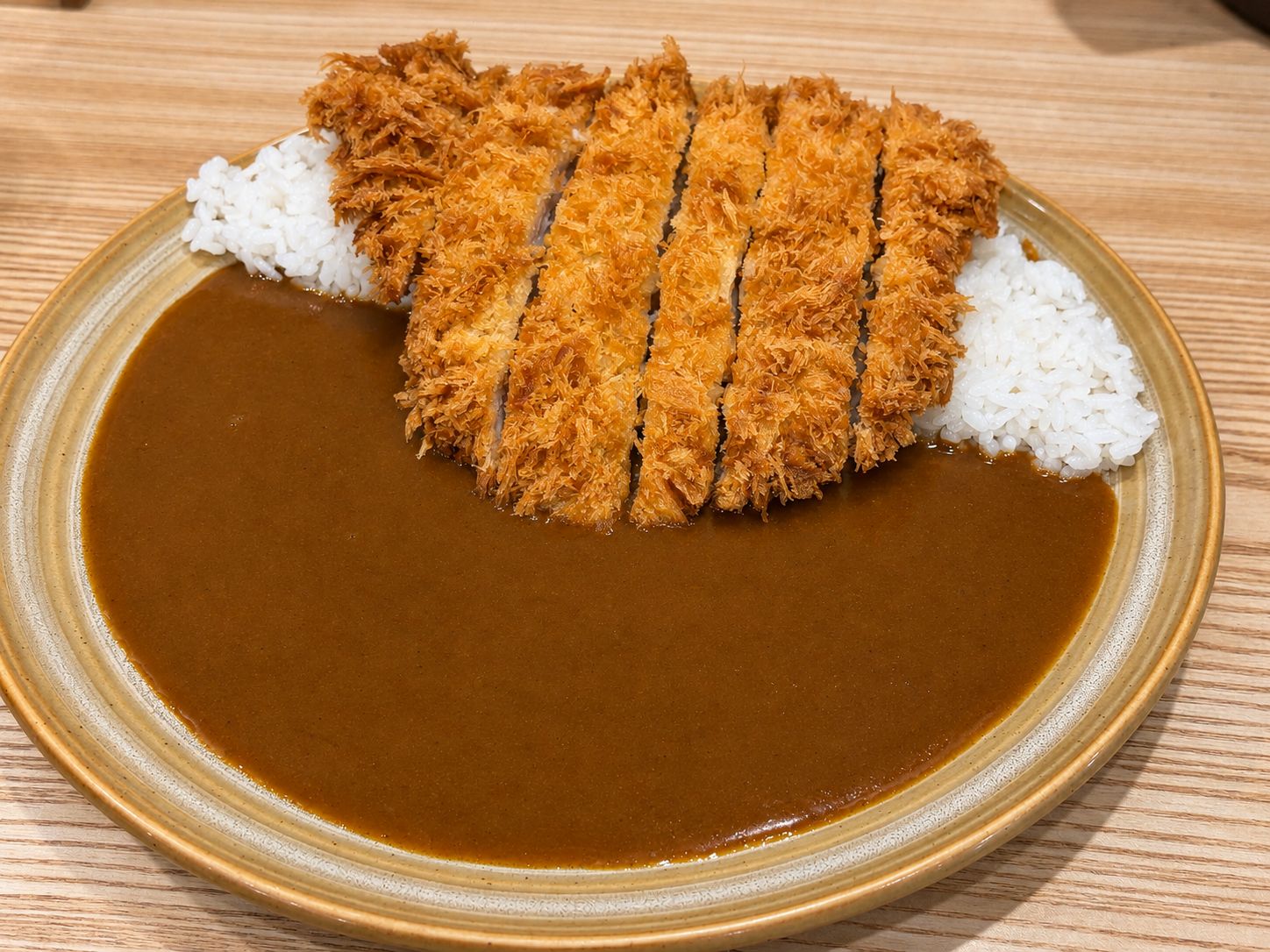
My usual order in Japan was the Hand-prepared Tonkatsu Curry. I found a very similar dish on the Korean menu.
Differences in menus and prices
The curry tastes very similar, but a closer look at the menus reveals some differences between Japan and Korea.
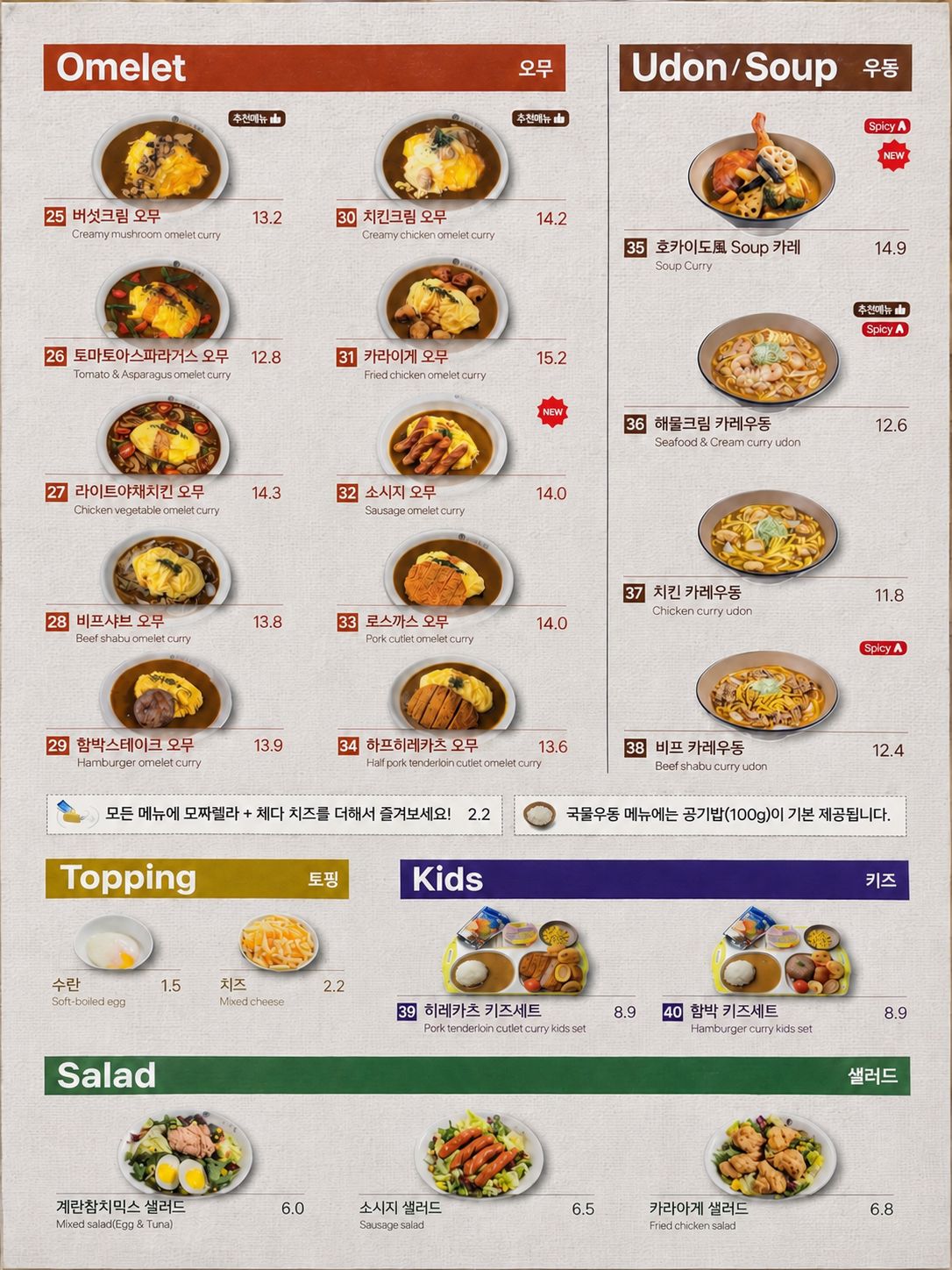
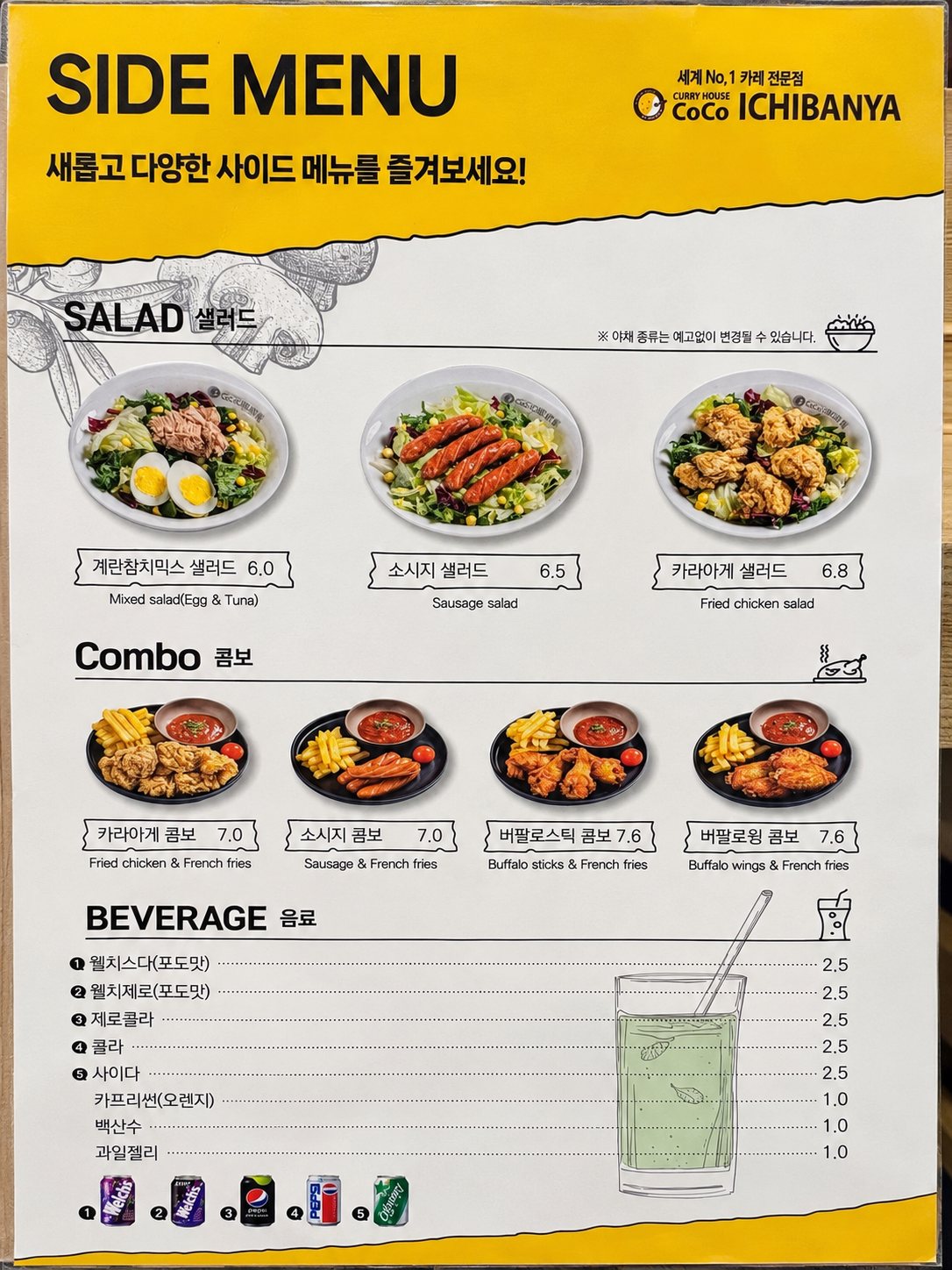
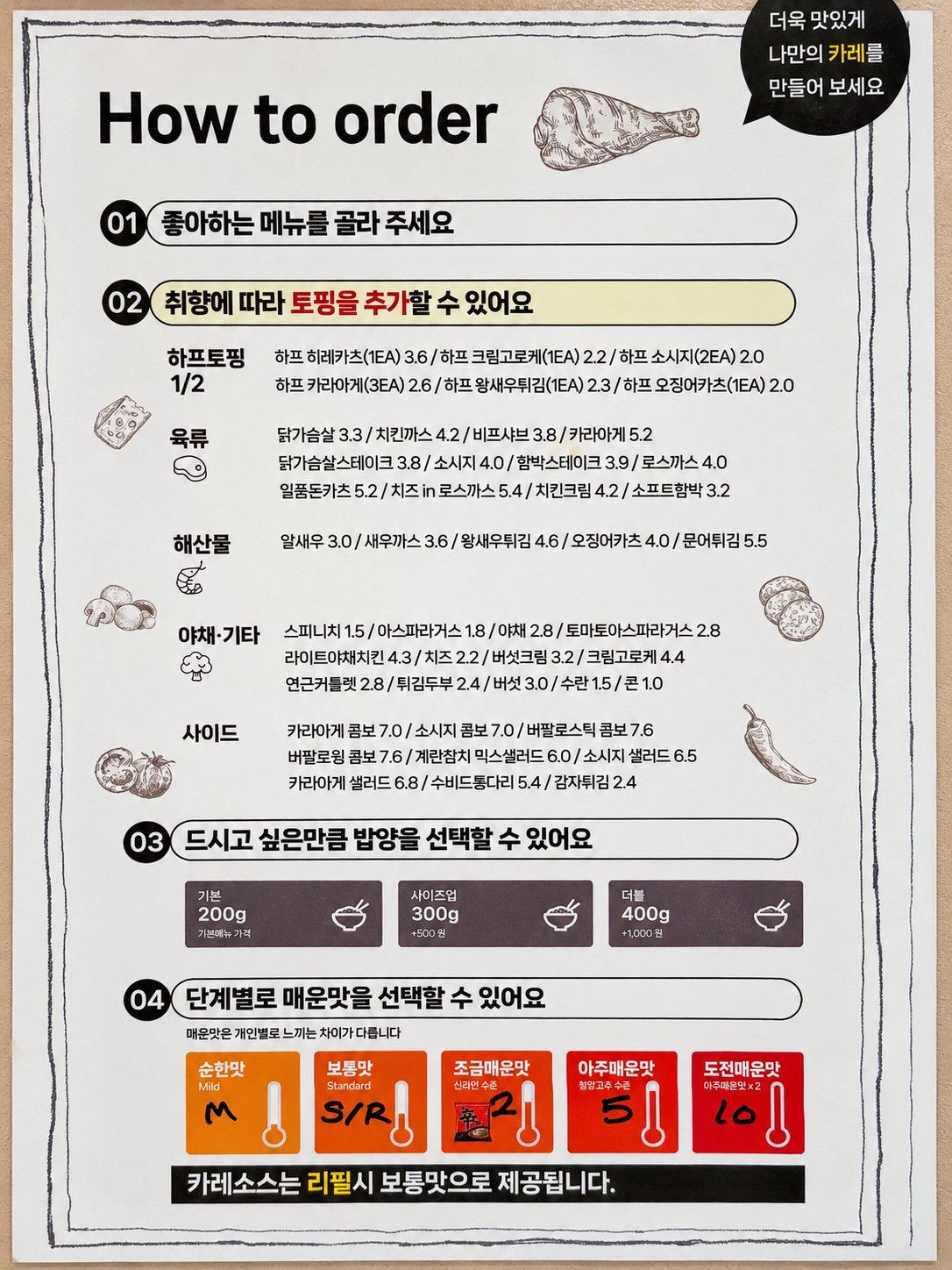
The menu I photographed listed three salads: an egg and tuna mixed salad for ₩6,000, a sausage salad for ₩6,500, and a karaage fried chicken salad for ₩6,800.
There was also plenty of choice when it came to omelet curry, with ten varieties on this menu. Creamy mushroom, beef shabu-shabu, fried chicken, sausage—it could be hard to choose. There were curry udon dishes and a Hokkaido-style soup curry, too.
Prices are another thing you might be wondering about.
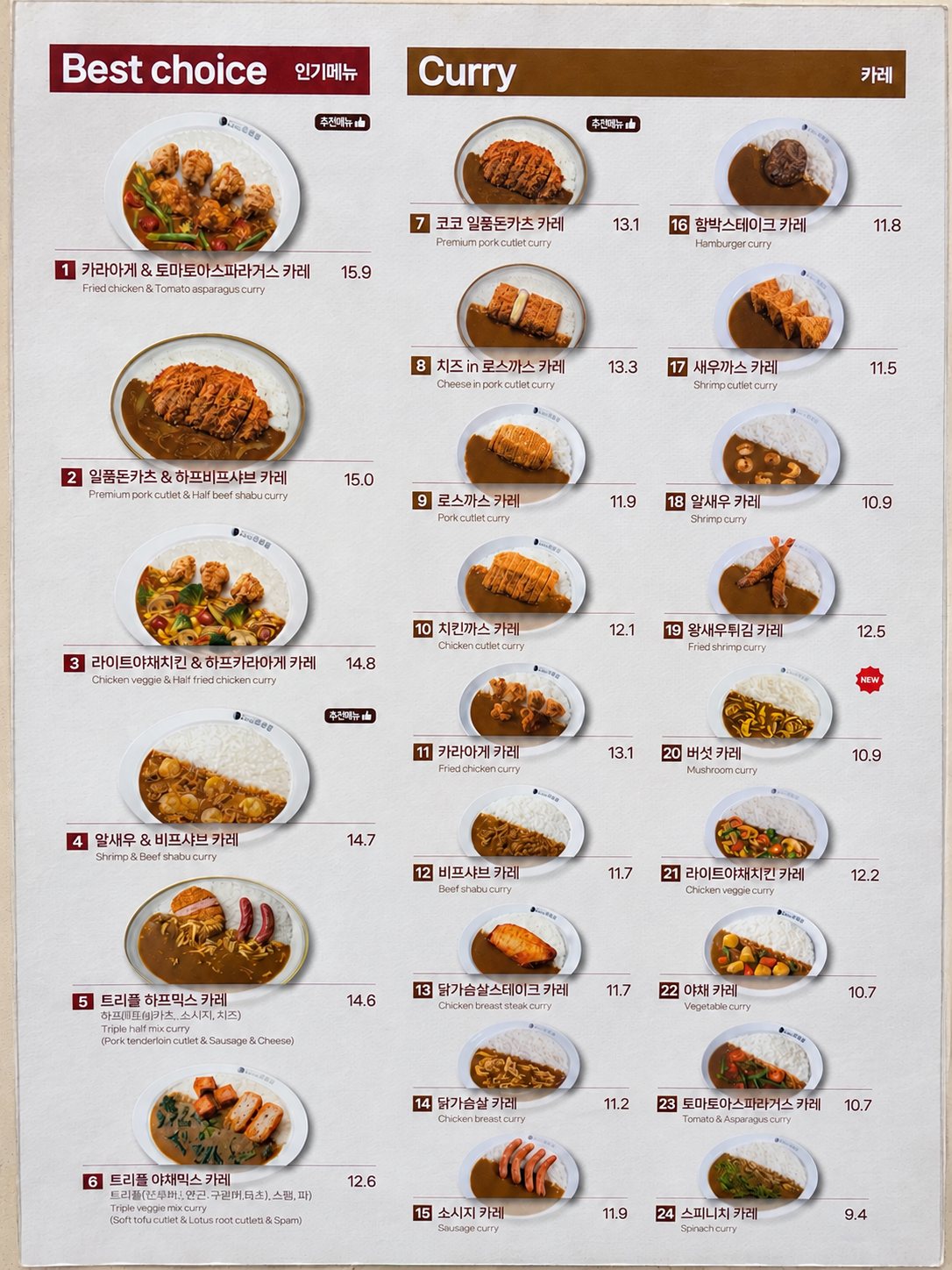
On the menu I photographed, “코코 일품돈카츠 카레” (CoCo Premium Pork Cutlet Curry) cost ₩13,100. It’s very similar to the Hand-prepared Tonkatsu Curry I used to order in Japan.
For comparison, Japan’s Hand-prepared Tonkatsu Curry was listed at ¥1,319, including tax, on the official menu I checked in November 2026.
The Japanese price is for 300g of rice and the standard spice level, while the standard Korean rice portion is 200g. Product specifications and exchange rates also affect the comparison, so it’s worth looking at the rice portions alongside the prices.
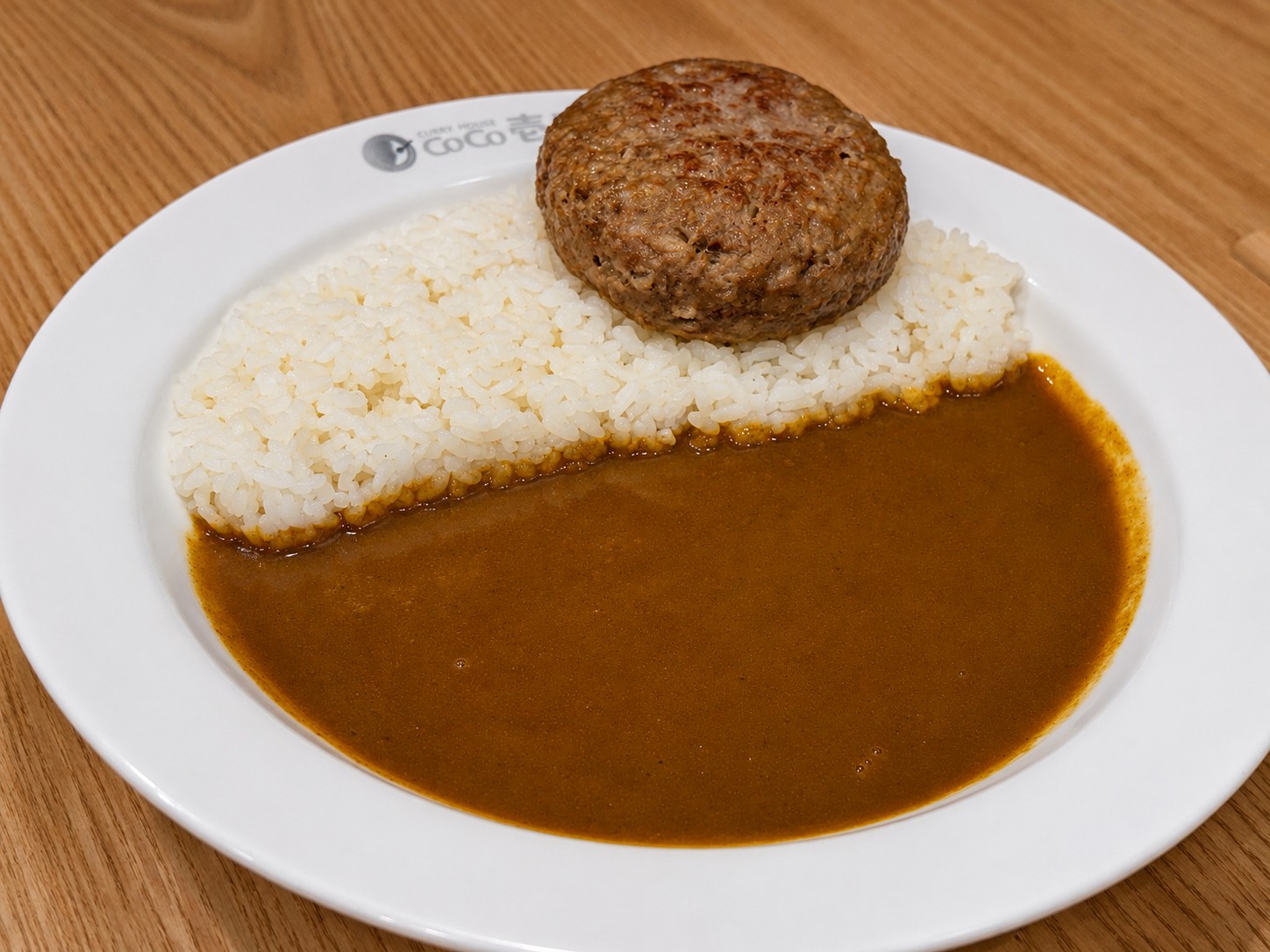
This is the hamburger steak curry. It was ₩11,800 on the menu I photographed. There are plenty of toppings to enjoy besides tonkatsu.
Choosing your spice level is different, too!
One of the pleasures of Coco Ichi is being able to choose how spicy you want your curry.
According to the official Japanese ordering guide, the choices range from mild up to spice level 20. Being able to fine-tune your order like this is a familiar part of Coco Ichi in Japan.
In Korea, meanwhile, there are five spice levels—and the way they’re explained is quite interesting.
The menu lists Mild (순한맛), Standard (보통맛), Slightly Spicy (조금매운맛), Very Spicy (아주매운맛), and Challenge (도전매운맛). Slightly Spicy is described as about as hot as Shin Ramyun, Very Spicy as about as hot as Cheongyang chili peppers, and Challenge as twice as hot as Very Spicy.
That’s a distinctly Korean way to describe the heat, and something I haven’t seen in Japan.
Rice portions are different as well
The way you choose your rice portion also differs between Japan and Korea.
In Japan, the standard portion is 300g. The menu book shows eight options—150, 200, 250, 300, 350, 400, 500, and 600g—and you can order more than that, too. Portions increase in 50g steps from 150 to 400g, and in 100g steps above 400g.
On the Korean menu I photographed, the standard portion is 200g, with three choices: 200, 300, or 400g. Choosing 300g costs an extra ₩500, while 400g costs an extra ₩1,000.
In Japan, you can also add extra sweetness to your curry, but I couldn’t find that option in the ordering information at the Korean restaurant I visited.
It’s the same Coco Ichi, but once you start comparing, there are more differences than you might expect.
I could get extra curry sauce for free
At the restaurant I visited, extra curry sauce is free. It’s a welcome service when you still have some rice left on your plate.
The extra sauce comes at the Standard spice level, though, as the menu explains. It’s useful to remember that it won’t necessarily match the spice level you chose for your original order.
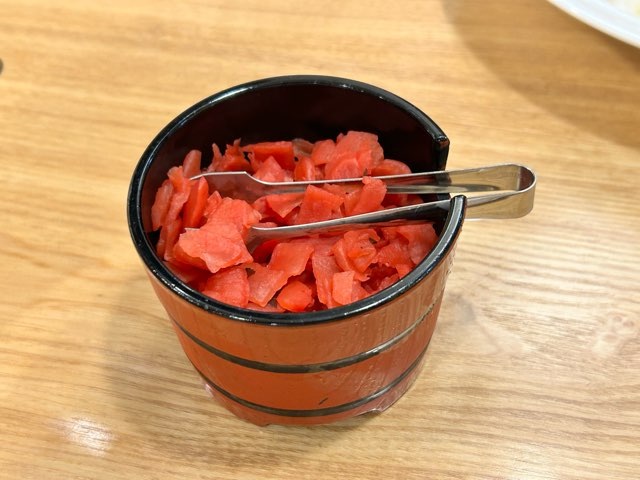
They had fukujinzuke, too!
Another thing I’d been wondering about was fukujinzuke, the Japanese pickles served with curry.
Fukujinzuke can be hard to find in Korea. I’ve only seen it in shops specializing in Japanese ingredients.
But the CoCo Ichibanya I visited had it ready and waiting!
For me, curry wouldn’t be complete without fukujinzuke. It’s lovely that even this little detail feels like Coco Ichi in Japan.
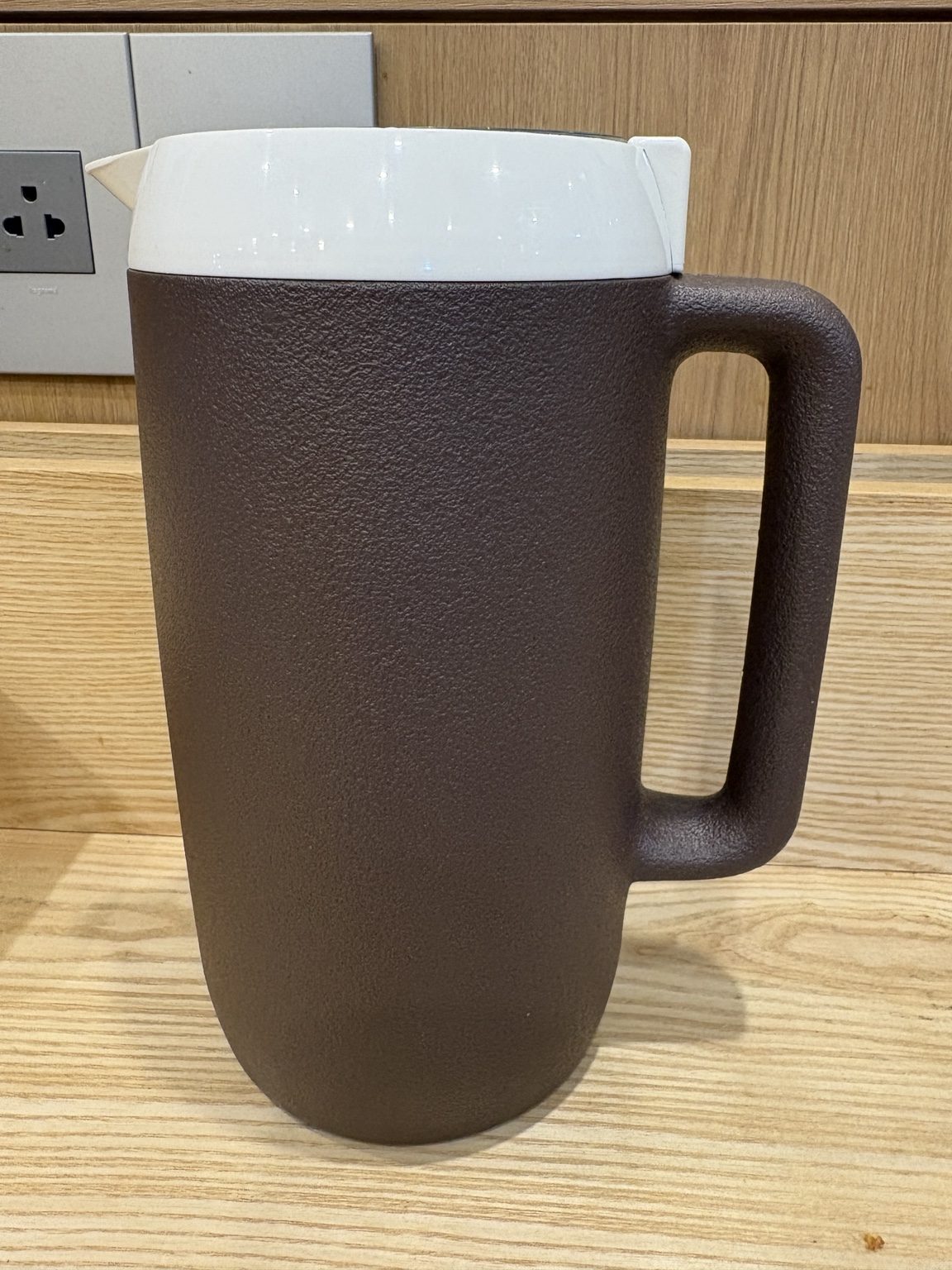
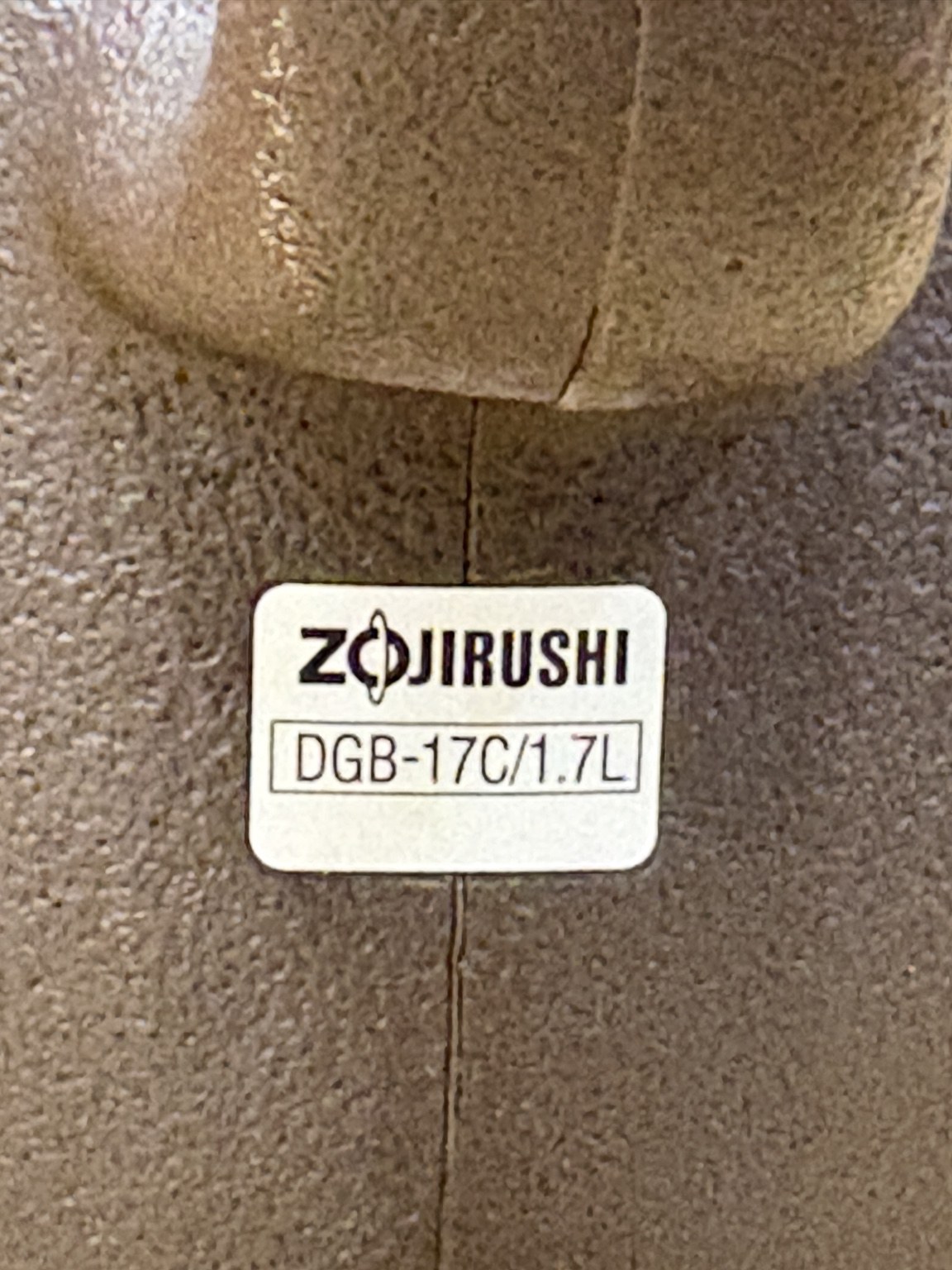
Even the water pitcher was from a Japanese brand!
Looking closely at the water pitcher on the table, I noticed the name “ZOJIRUSHI.” It wasn’t just the curry—there was a Japanese manufacturer’s product right here on the table, too.
Why I’m grateful for CoCo Ichibanya in Korea
I still haven’t forgotten how I felt when I first found CoCo Ichibanya in Korea.
Since then, I’ve been going about once a month.
There is so much delicious food in Korea. But when you’ve lived abroad for a long time, you sometimes find yourself missing familiar flavors from Japan.
At times like that, it’s wonderful to be able to enjoy a curry here in Korea that tastes so much like the one I knew back home.
That’s why I’m so grateful for Coco Ichi.
Incidentally, CoCo Ichibanya’s official Korean website has this description:
“A curry with a mysterious flavor that you never tire of.”
It’s the brand’s own description, but it captures how I feel, too.
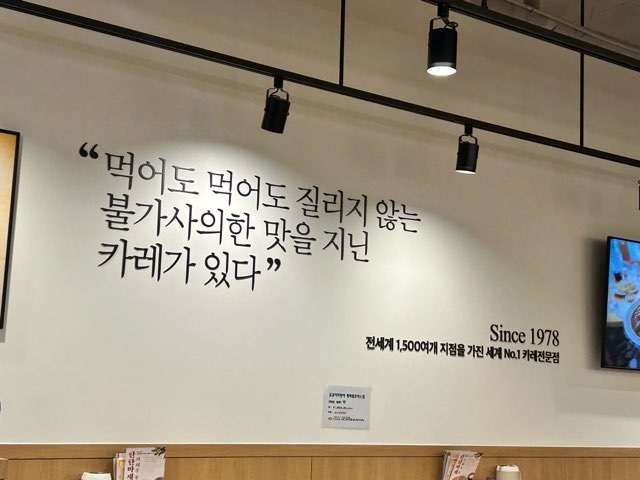
“A curry with a mysterious flavor that you never tire of.”
If you’re visiting Korea on vacation, seeking out Japanese curry might not be high on your list.
But if you’re staying here for a while and start missing the flavors of Japan, try stopping by a Korean Coco Ichi.
You might find that familiar, comforting taste waiting for you.
Here’s CoCo Ichibanya’s official Japanese website.
Here’s CoCo Ichibanya’s official Korean website.

Note: Restaurant counts are based on Ichibanya’s official figures for the end of February 2026. Korean menus, prices, and services refer to the restaurant I visited and photographed. Japanese prices were checked on the official website in November 2026. Menus, prices, and services may vary by location and over time.